
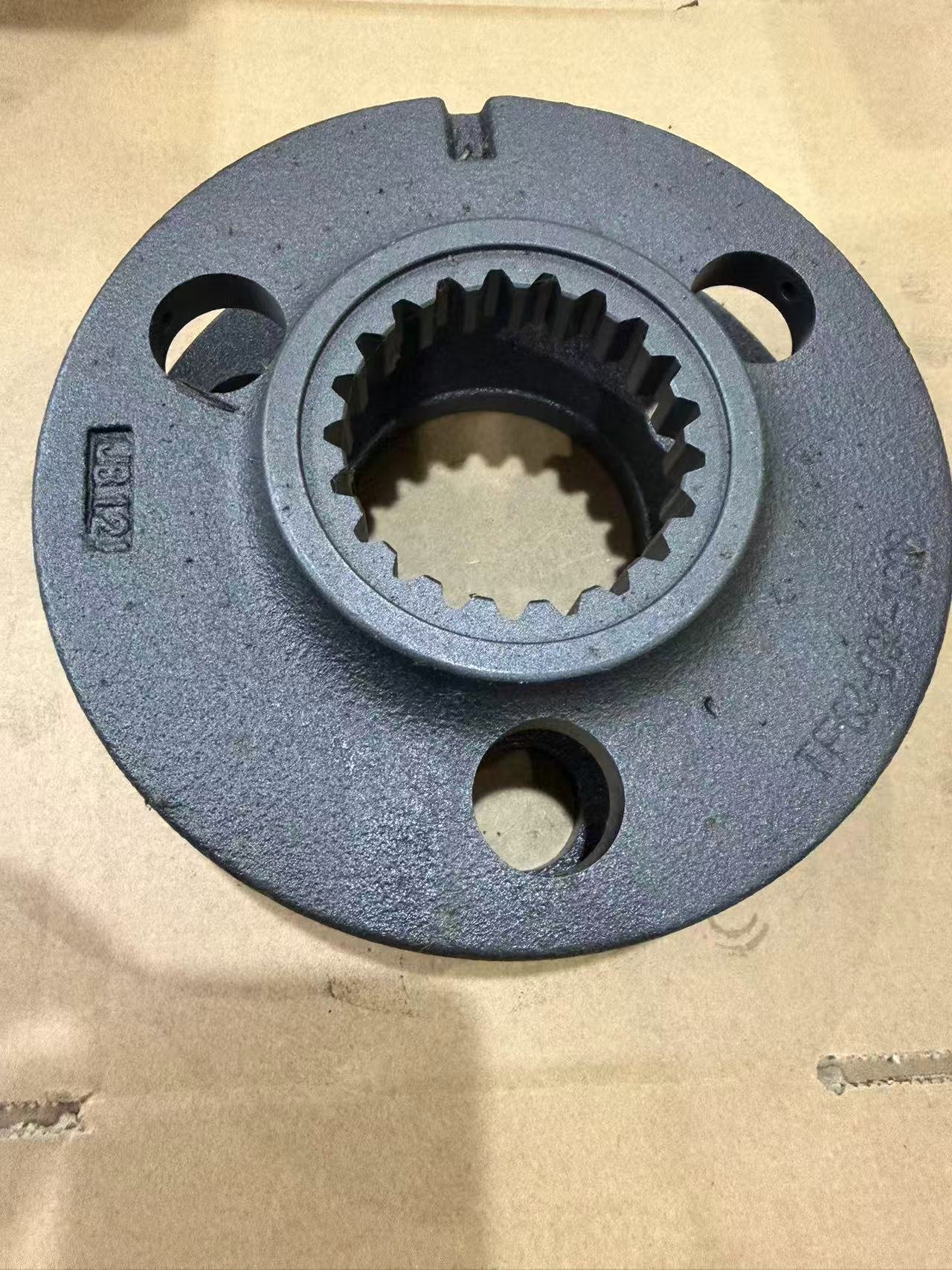
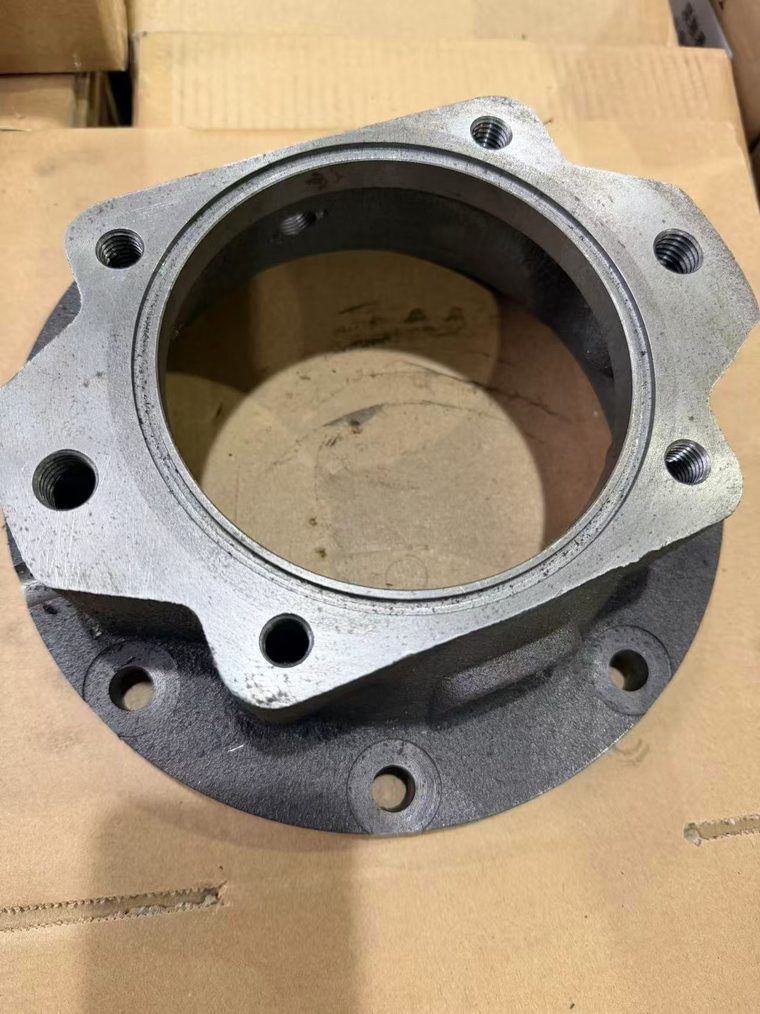
Almost every drawing that arrives here is a crane part: hoisting gears, travel wheel gears, motor housings, brake drums, end shields. But the machines behind those parts do not care what industry the drawing came from. The same hobbing, spline broaching, CNC turning and inspection also produce gears for robots, cars, textile machines and food processing equipment.
Buyers usually ask the same question first: can a shop that specialises in crane drives handle something smaller and quieter? The answer is in the tolerance, not in the industry name.
One shop, several industries
What we run is fairly narrow: gear hobbing and shaping from module 0.5 upward, spline broaching, CNC turning and milling, casting plus machining under one roof in Wuxi, Jiangsu, induction and case hardening through qualified heat-treatment partners, and 100% dimensional inspection before packing. Most orders land between 50 and 2,000 pieces.
That mix is why the same shop can quote a 12 kg planet carrier and a 60 g robot pinion in the same week.
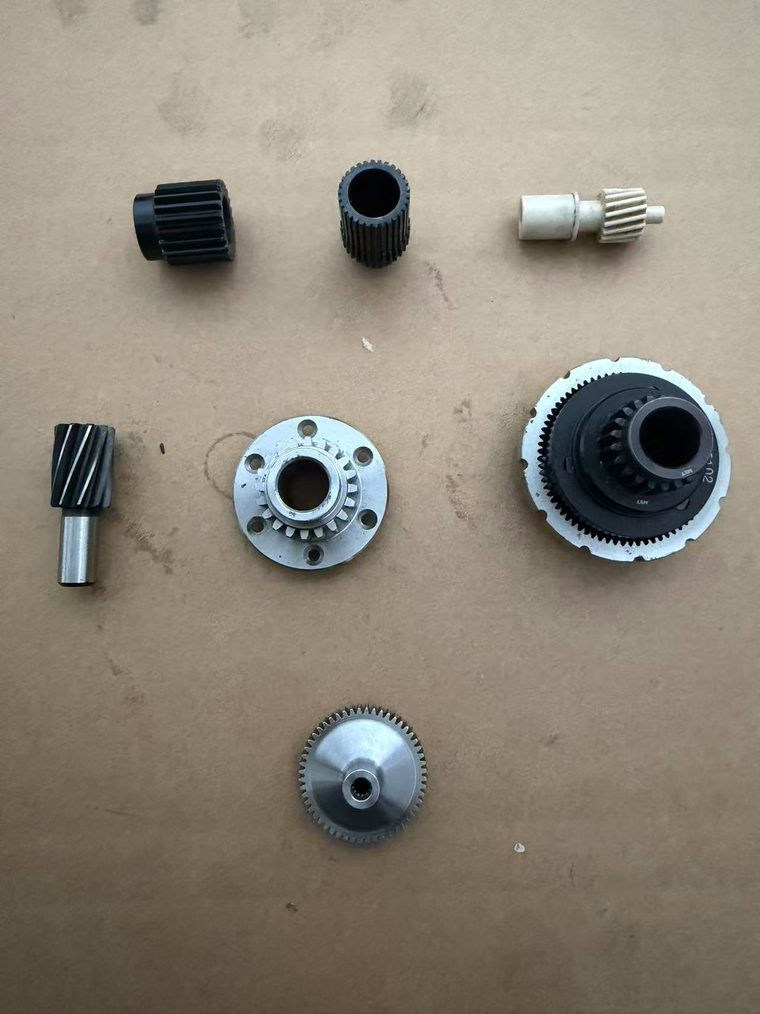
Robotics and automation
Small spur gears, bevel pinions, spline hubs and timing pulleys, usually in 20MnCr5 carburized or 40Cr induction hardened. What decides acceptance here is not load capacity but quietness and repeatability: backlash held across the batch, tooth-to-tooth error, and hub-to-bore concentricity that lets the part sit on a servo shaft without runout. A gear that is dimensionally inside tolerance but varies from piece to piece will still make noise in a robot joint.
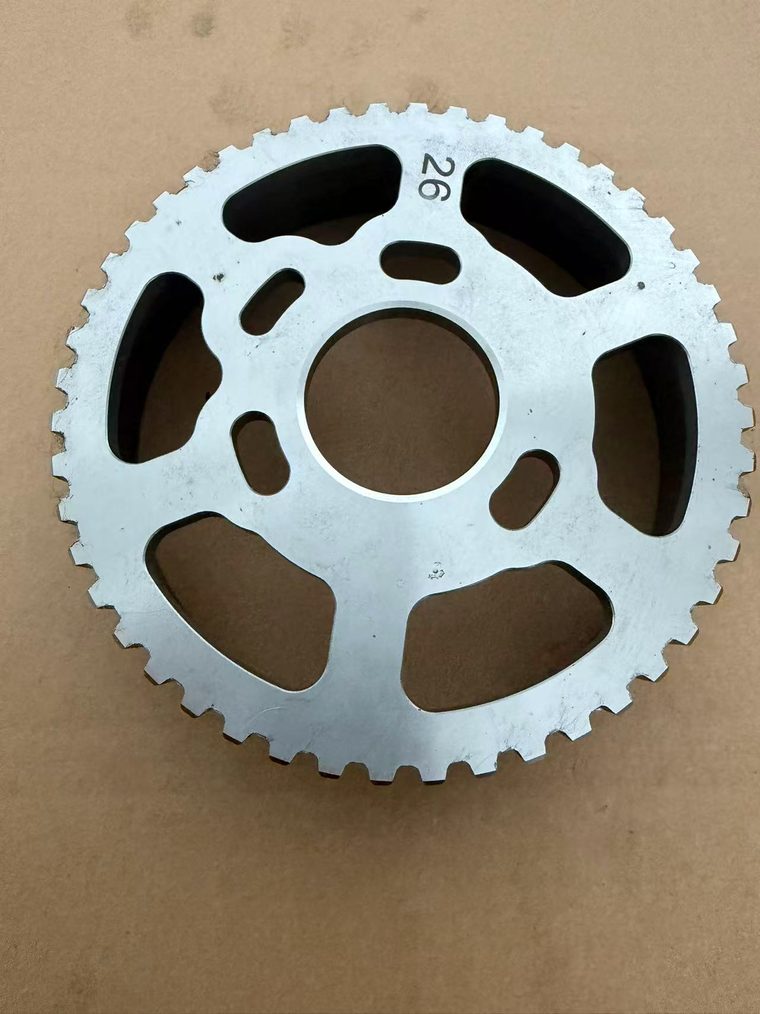
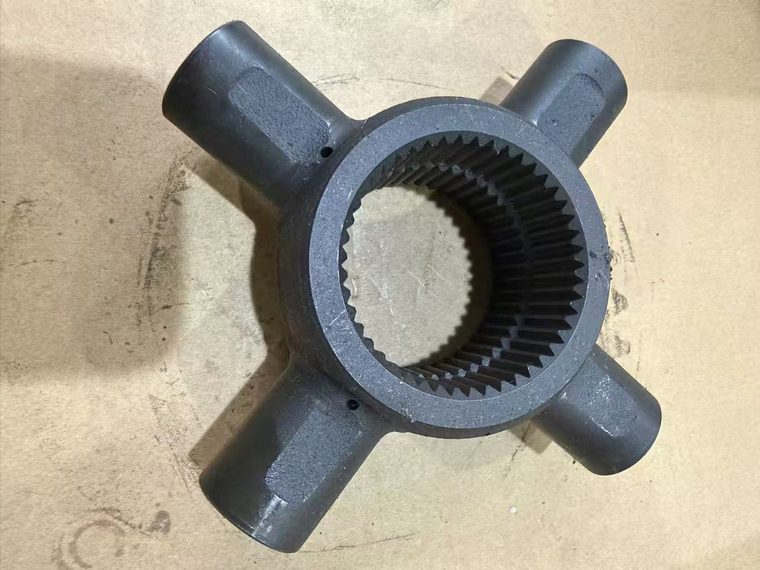
Automotive
Two families dominate: timing pulleys with lightening windows and universal joint crosses with internal splines. On pulleys the critical points are tooth profile, face runout and balance at speed; on crosses it is spline fit, trunnion diameter and hardness depth. Where the drawing demands it, we add crack detection after hardening and shot peening before finishing.
Textile machinery
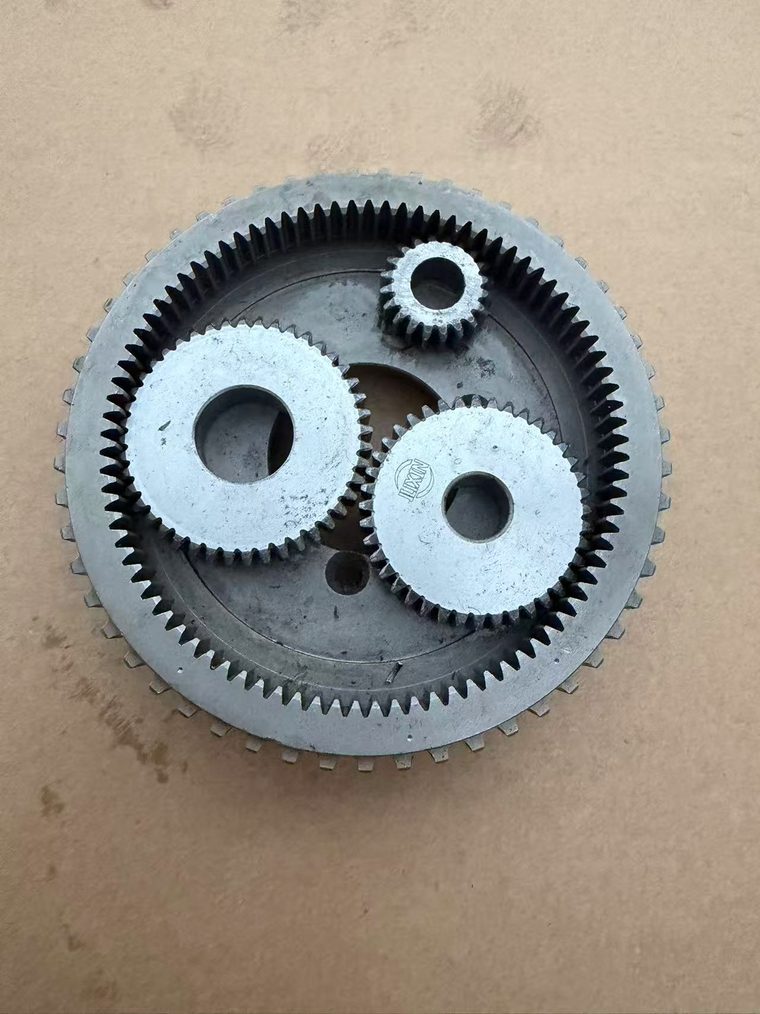
Textile machines run continuously, in dust and lint, for years. Gear clusters arrive as a matched set: an internal ring gear inside a housing with two or three pinions that must keep centre distance and mesh quietly after thousands of hours. We machine the housing and the gears as one set, harden the pinions, and control the centre distance in the housing rather than trusting the gear alone.
Food processing equipment
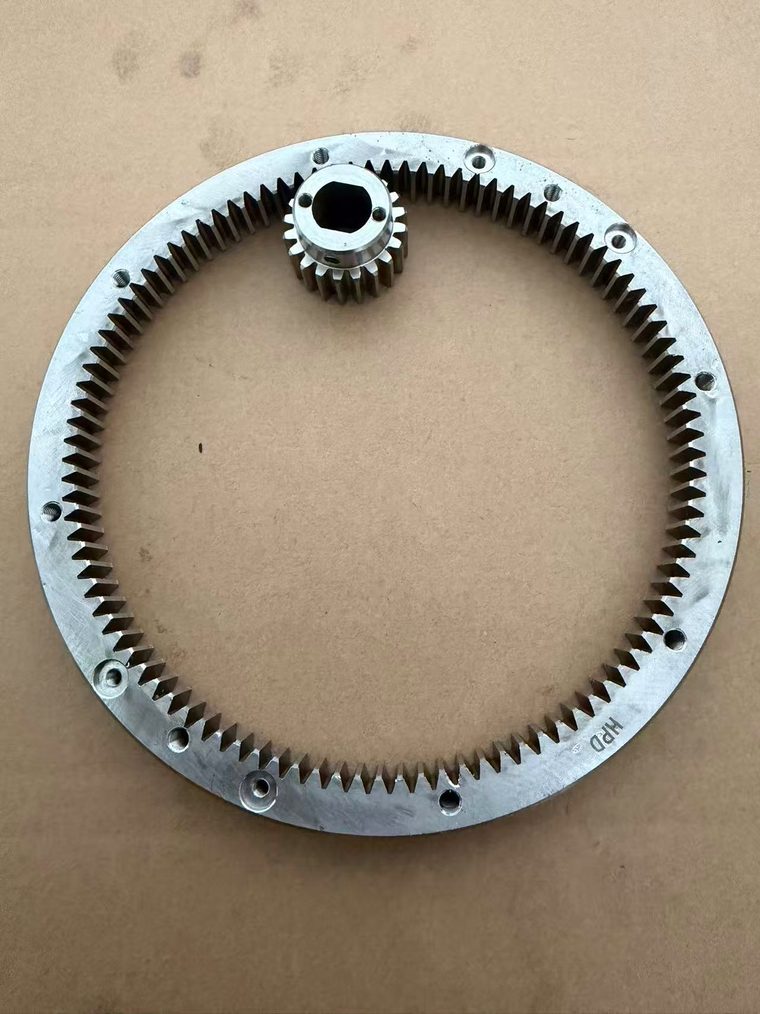
Ring gears and pinions for mixers, dough handling and packaging lines. Two extra requirements come with the industry: every edge deburred and the part washed before packing, because a burr ends up in the product, and corrosion protection that survives wash-down — electroless nickel or stainless where the drawing asks for it.
What does not change between industries
The paperwork is identical whether the part goes into a crane or a robot: EN 10204 3.1 material certificates tied to heat numbers, first article inspection reports on new parts, 100% dimensional inspection, and packing specified for long sea freight. A buyer switching industries should not have to switch suppliers — and a shop that already documents everything for crane customers is usually the easier one to audit.
If your part is outside the crane market, that is not a problem. Send the drawing with material, quantity and the tolerance that actually matters — we will come back with a quotation and a process note within 24 hours.
Need these parts made to your drawing? Send your specification — clear quotation within 24 hours, EN 10204 3.1 certificates as standard.
Get a Quotation